
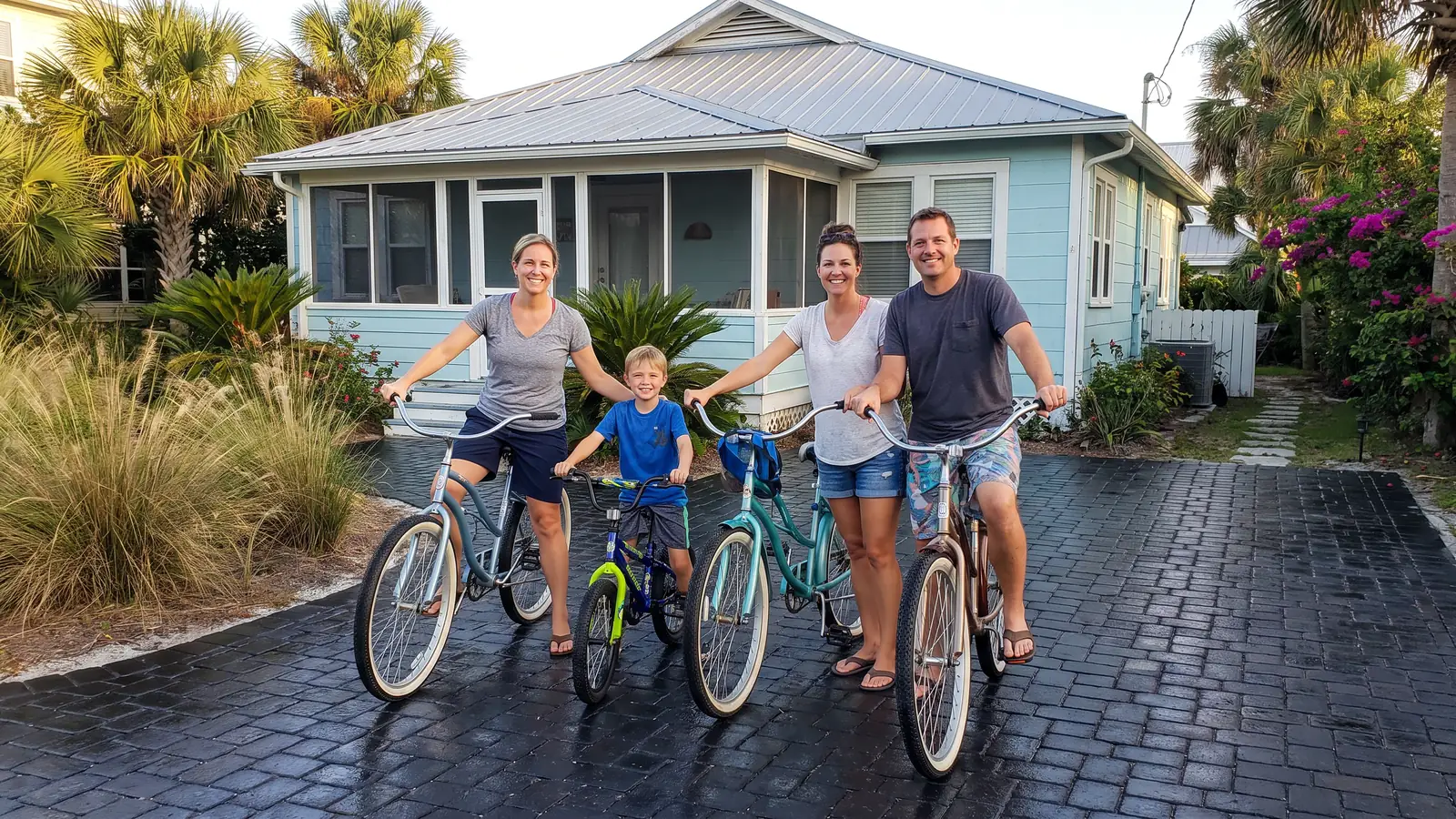
Paver sealing for Jacksonville Beach homes
Paver Sealing in Jacksonville Beach, FL
From the rebuilt pier to Penman Road, Jacksonville Beach pavers can look new again; call (904) 685-4409 for an estimate.
- Brings out deeper paver color
- Fresh joint sand helps lock pavers in place
- Gives weeds less room to grow
- Makes the surface easier to keep clean
- Free estimate, no obligation
Request a Free Estimate
Free, no obligation.
Fast, careful paver sealing in Jacksonville Beach
Paver sealing is available in Jacksonville Beach, from the blocks near the pier to the streets off Penman Road. A local contractor handles the wash, the sand and the sealer on driveways, walkways and pool decks, and the estimate is free of charge. To get started, request a free estimate online. Someone answers within 1 business day, usually much sooner.
Picture a driveway three blocks from the ocean with a chalky haze and joint sand blown thin. A wash, fresh sand and a new coat pull the color back to one even tone. If you would rather talk first, call (904) 685-4409 and describe what you see on your pavers.
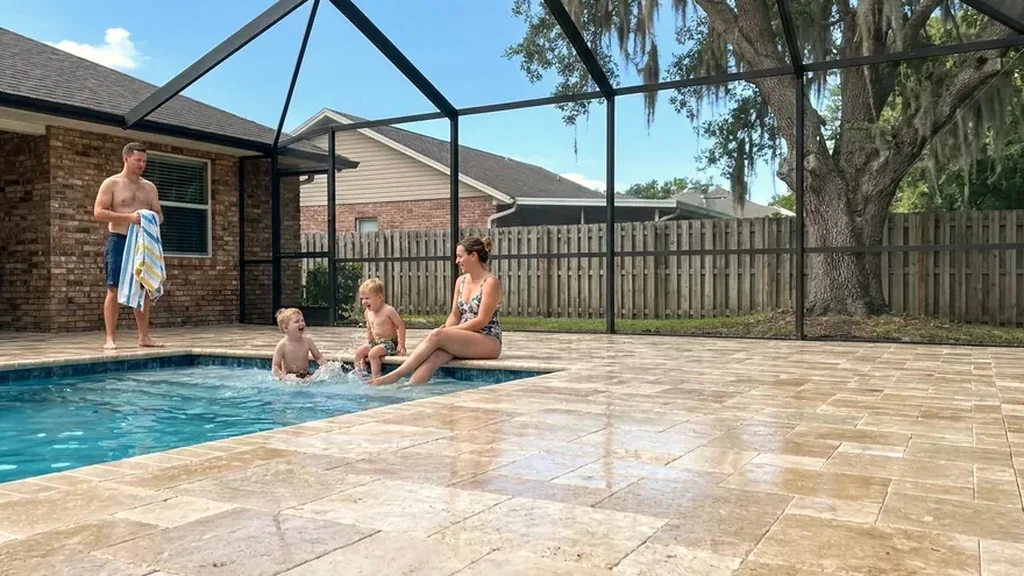
Why hire a local paver sealing contractor in Jacksonville Beach?
People in Jacksonville Beach pick a local paver contractor because salt, sand and small lots shape how a job should go. To see how that fits your street, request a free estimate online.
Free look at your property
A local contractor measures your Jacksonville Beach driveway, walkway or pool deck at no charge. You see a price before you agree to anything.
A range you can check
Companies in Northeast Florida commonly publish $1.75 to $3.25 per square foot to clean, sand and seal. Hold any Jacksonville Beach quote up to it.
A finish picked for wet feet
Matte is the safer choice around a wet pool deck. A wet look deepens color but shows scuffs sooner. Ask to see a test corner.
The date is yours
You choose the day and the finish, and the estimate carries no obligation. A pop-up beach shower may move the date, and that is normal.
Get Your Free Estimate in Jacksonville Beach
Tell us about your pavers in Jacksonville Beach.
Free, no obligation
What paver problems show up most in Jacksonville Beach?
Salt film on pale pavers
Water covers about two-thirds of Jacksonville Beach, so the air carries salt to nearly every driveway. A paver maker explains that airborne salt crystallizes on surfaces as moisture dries, and that light-colored pavers show splash marks and residue sooner. On a light driveway that reads as a chalky haze. Sealing before the haze sets in makes later washes easier. Washing the salt off a driveway is easy to put off, and the film builds each season. A rinse with a hose helps between visits, but only a wash lifts the film that has already dried on.
A coat that clouds on a damp day
One Jacksonville paver company says nearly every call about white sealer traces to damp pavers or a coat laid on too thick. The beach is humid, and Northeast Florida's June to September wet season brings 28.81 inches of rain, more than half the year's total. A daily sea breeze sets off the storms. A job here has to wait for the pavers to truly dry. That is why a rushed beach job can leave a milky coat that has to be stripped.
Joint sand that leaves in a downpour
Beach ground is sandy, and a beaches paver company says heavy summer rain makes joint sand migrate. A record 1.76 inches of rain hit the airport on December 6, 2016, and driveways near 12th Avenue South flooded. Once joints thin out, pavers shift and weeds root in the gaps. Fresh sand goes in after washing and before the coat. Near the pier the lots are small, so one low corner can affect the whole driveway. Gaps that stay open also let tires push pavers out of line over time.
Aprons that sit in city right-of-way
The City of Jacksonville Beach says many homeowners use the city right-of-way beside their homes, and most of that use needs a revocable encroachment permit. The city also updated its paver driveway standards in October 2023. If your paver apron crosses the curb line, ask the city what applies before the work starts. A contractor can sketch where your lot line falls so the question is clear. Pavers in that strip may be removed and relaid when the city builds its urban trail, which is another reason to ask first.
Slick pool decks
Pool decks here get wet, sandy feet all summer. A Jacksonville paver company says deck sealer needs an anti-slip additive in any finish, because gloss without it is slippery when wet. It calls matte the safest finish near pools. Ask the contractor to name the additive on your quote. Wet, sandy feet and pool splash make this the spot where traction counts most. Slip resistance is worth a few extra minutes of planning before the first coat.
Does a 1960s ranch or a mid-century home change how pavers get sealed?
Do mid-century beach homes need special pavers care?
It can, because Jacksonville Beach has a notable collection of mid-century modern homes, many by architect William Morgan. Clean lines and low roofs look best with a quiet matte finish on the driveway. Homes in San Pablo Terrace, a community off Penman Road, range from 1955 to 2005, and the middle year is 1963. Tell the contractor your home's era when you request a free estimate online.
What do Ocean Terrace and South Pablo Beach add?
Ocean Terrace, near South Beach Park, goes back to the early 1980s and has a homeowners association. South Pablo Beach is a walkable grid, and nearby Sea Grove has 174 homes built in the 1920s. Older blocks mean tighter drives and hand-carried equipment. If your street has association rules, call (904) 685-4409 and ask what the contractor needs to see first.
How does flood risk change paver plans?
Flood maps matter too. One review of 191 listing addresses in 16 neighborhoods found 69 percent outside the high-risk flood area, while Seascape Condo, The Sanctuary and Villas at Marsh Landing were mostly inside it. Pavers on low ground can sit damp longer after storms. Mention your block when you request a free estimate online so the schedule allows for drying.
What does paver sealing cost in Jacksonville Beach?
What does the published rate cover at the beach?
Published prices around Northeast Florida run $1.75 to $3.25 per square foot for the full wash, sand and seal. A Jacksonville cost guide says smaller projects cost more per square foot, and locked gates, stairs and tight side yards add prep time. Many Jacksonville Beach lots are compact, so a small patio can land above the middle of the range. To price your own pavers, request a free estimate online.
How does failed old sealer affect the quote?
Old sealer is the other big swing. The same guide says failed, hazy or flaking sealer has to be stripped, and that adds cost. A newer coat that only needs a wash and a top coat costs less. Call (904) 685-4409 and describe how your pavers look now.
| Paved area | Typical example | Clean, sand and seal |
|---|---|---|
| 300 sq ft | Small patio or walkway | $525 to $975 |
| 600 sq ft | Two car driveway | $1,050 to $1,950 |
| 1,000 sq ft | Large driveway or pool deck | $1,750 to $3,250 |
| 1,500 sq ft | Driveway plus pool deck | $2,625 to $4,875 |
Math based on the $1.75 to $3.25 per square foot that Northeast Florida paver companies publish. Your contractor sets the actual price after seeing the surface. Repairs, leveling and stripping failed sealer are usually extra.
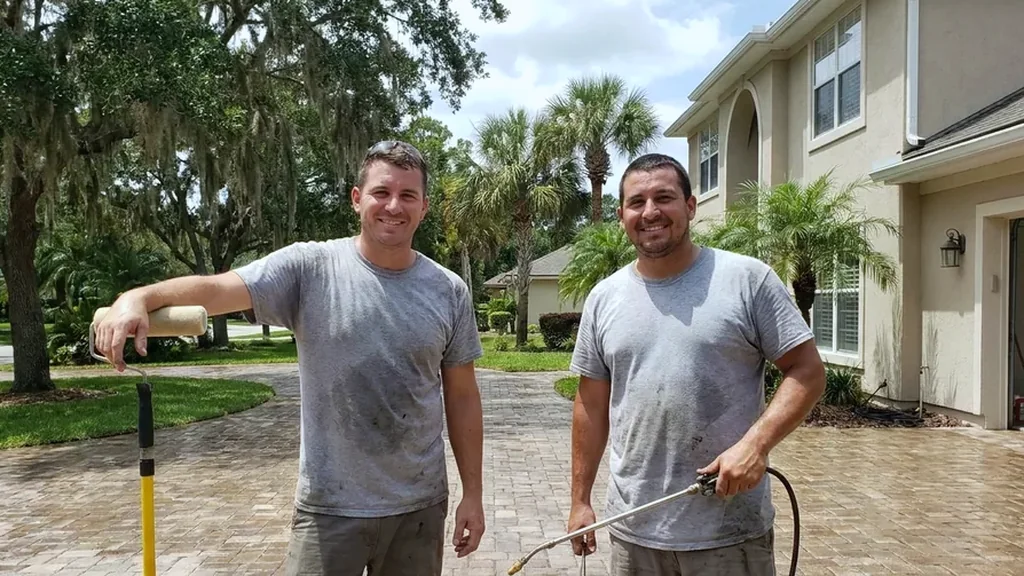
How does a paver sealing job work in Jacksonville Beach?
Look over the lot and the old coat
The contractor walks the driveway, walkway and pool deck, and checks for sunken or lifted spots. Those get reset first, because a coat locks in whatever it covers. The contractor also learns what product went on before. A water-based product cannot be put over a solvent-based one. Photos of the pavers help the contractor plan the right crew and product before arrival. It also helps to point out where sprinklers hit the pavers and where the car usually sits.
Wash off the salt and mildew
Pressure washing lifts the salt film, tire marks and green growth. A beaches paver company says shaded north-facing spots grow algae and mildew, so side yards get extra attention. Rinse water is kept off pool water and planting beds. Washing also pulls out joint sand, so the joints will need to be refilled. Pale pavers get a closer look for stains, and the wash is timed so the surface can dry afterward. Oil drips and rust from irrigation water get treated at this stage too.
Refill the joints with fresh sand
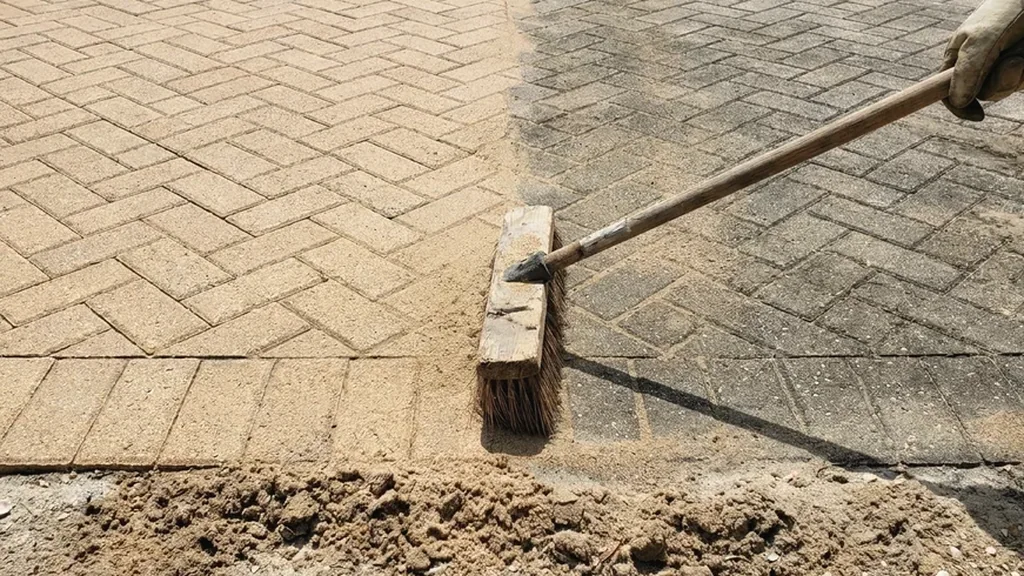
A Jacksonville company puts it simply: joint sand goes in before the coat, and not after. Sand goes into every gap and the surface is swept clean. Beach ground and summer rain move sand around, so full joints matter here. The sand also holds pavers in place under turning tires. A fresh line of sand also keeps edges from creeping at the driveway apron. Colored joint sand is an option on some jobs, so ask what the contractor stocks.
Wait for the pavers to dry
Sealer needs a dry surface. Humidity keeps pavers from drying fully near the coast, and November is the driest month with about 2.50 inches of rain. Fall also comes after hurricane season, which a Jacksonville cost guide likes for sealing. A careful contractor waits instead of coating damp pavers. On a shaded pool deck this can take longer than on a sunny drive. Morning dew counts as moisture, so the start time may shift.
Spray, back-roll and keep off
The sealer is sprayed on and then back-rolled so it reaches the joints, the way a Jacksonville paver company describes it. On a pool deck the anti-slip additive goes in. Foot traffic is usually fine in a few hours, and cars should stay off for about a day, depending on the product and the weather. Turn the sprinklers away from the new coat until the contractor gives the all clear. Furniture goes back only after the coat has cured, which the contractor will name.
Complete paver services in Jacksonville Beach
What is the order of a beach paver job?
A Jacksonville Beach job runs in a set order: wash, re-sand, dry, then seal. Washing clears salt and mildew before anything is locked in. Sealing goes last so nothing dirty gets trapped under it. To ask how long each stage takes on your lot, call (904) 685-4409.
Which beach surfaces take sealer?
Driveways take tires and salt overspray. Walkways to a front door stay damp in shade. Pool decks need traction under bare, wet feet, so the finish matters most there. Tell the contractor which of these you have when you request a free estimate online.
Matte or wet look near the ocean?
Finish choice splits into matte and wet look. Matte keeps traction, while a wet look deepens color but shows marks sooner. Changing finishes later means stripping the old coat. Call (904) 685-4409 to talk it through.
What can a summer storm do to the schedule?
Jacksonville Beach gets most of its rain in summer, and a sea breeze often sets off an afternoon storm. A job may slide a day or two to let the pavers dry. Cooler, drier months of fall are a common time to seal. For a date that fits your street, request a free estimate online.
Questions to ask before you hire
- Can you send proof of liability coverage before you start?
- Will you reschedule if a tropical system or a sea breeze shower is in the forecast?
- How do you protect my pool water and salt system from runoff while you work?
- Will the sealer leave a wet look or a natural matte finish on my pavers?
- What is the deposit, and when do I pay the rest?
- How do you handle joints that have washed out or sunk after heavy rain?
- Will you test the sealer on a small corner first so I can see the color?
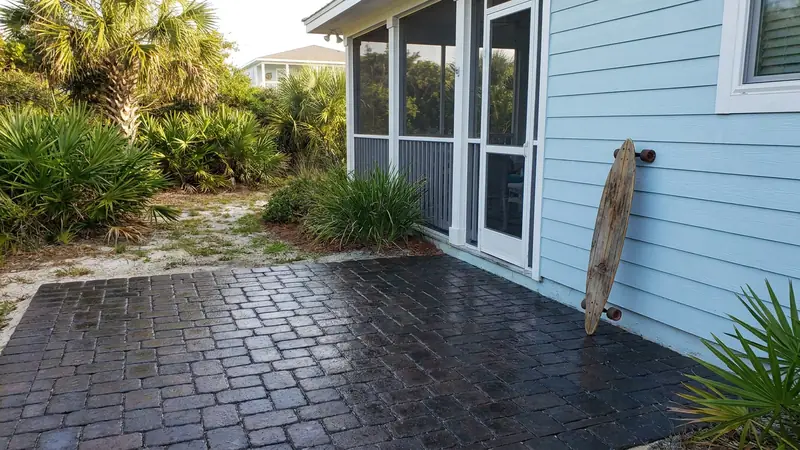
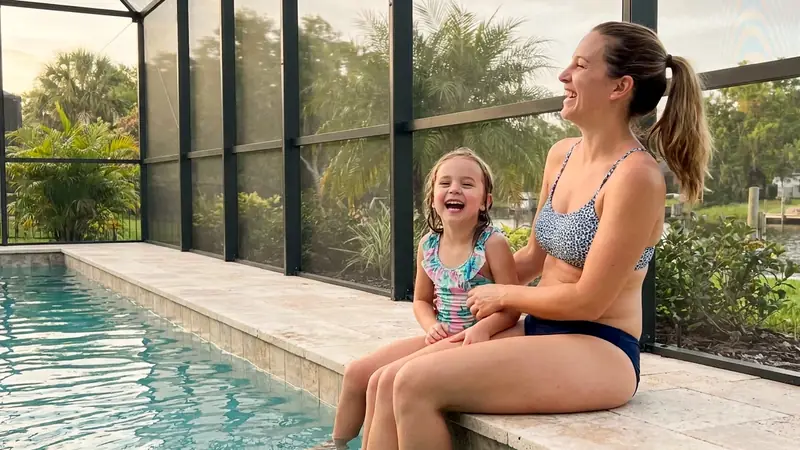
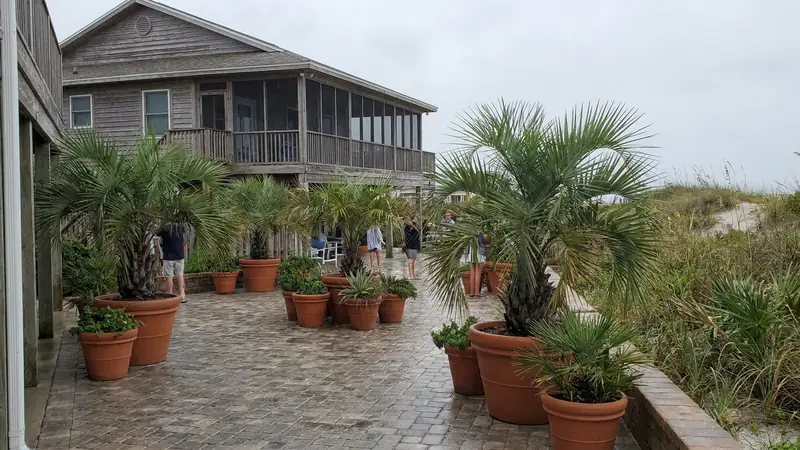
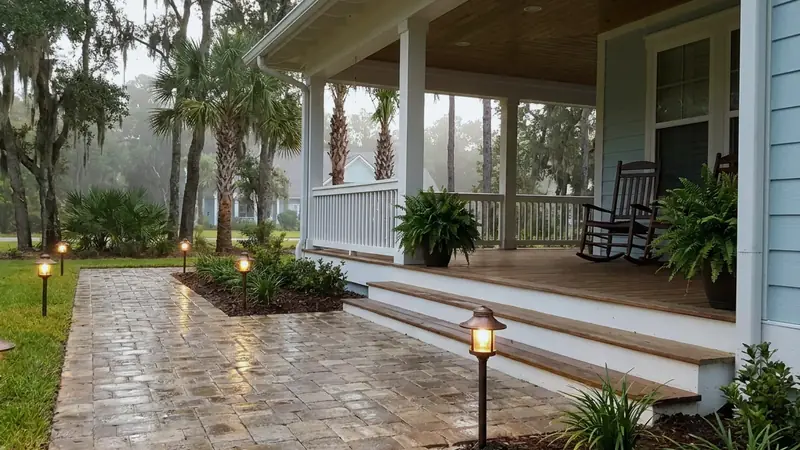
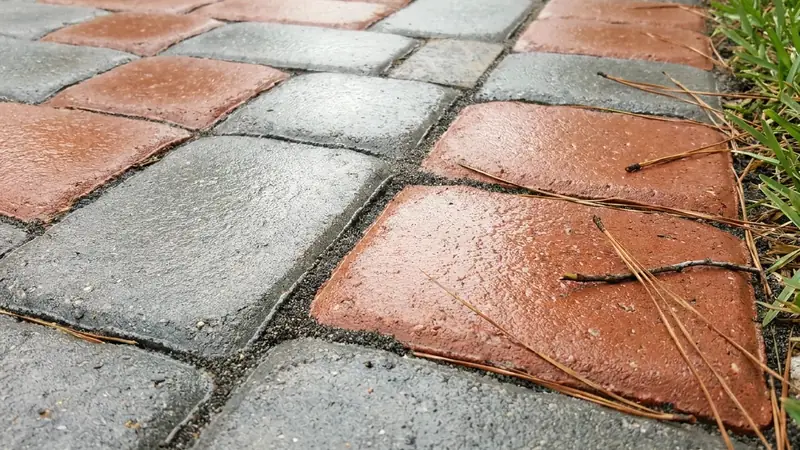
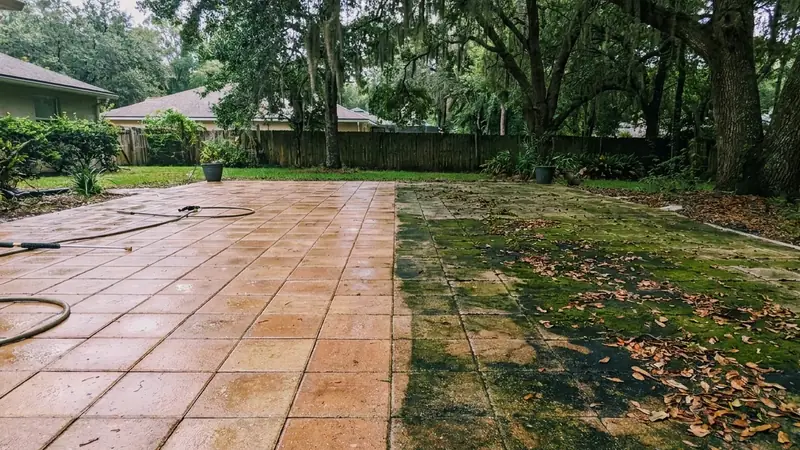
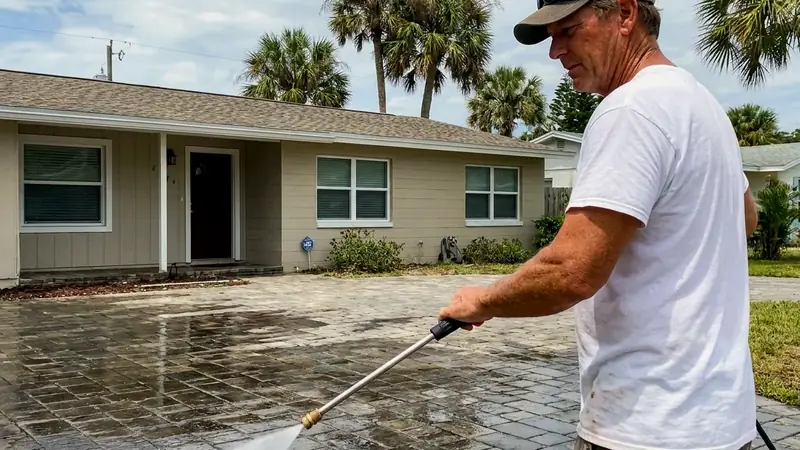
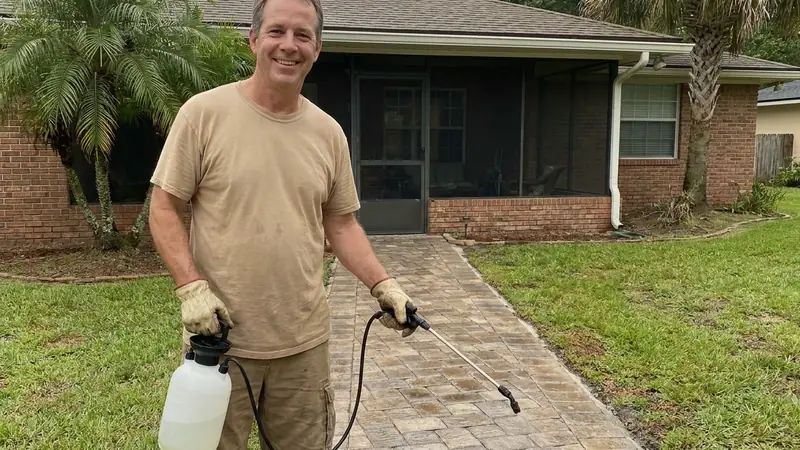
What do sealed pavers look like around Jacksonville Beach?
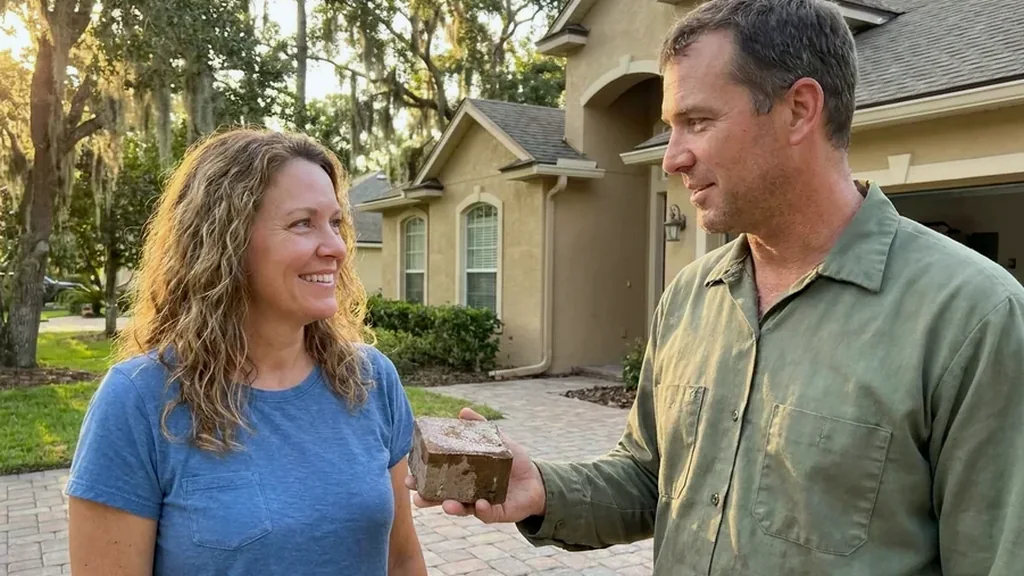
Why local matters in Jacksonville Beach
Why does the right-of-way matter for a paver apron?
A contractor who knows Jacksonville Beach will ask whether your paver apron crosses into the city right-of-way. That question rarely comes up inland. The city's rules on encroachment permits and paver driveway standards can change what work is allowed at the curb. For a contractor who works the beaches, call (904) 685-4409.
When does hurricane season bear on the date?
Timing is local too. Hurricane season runs from June 1 to November 30, and the peak is September 10. Hurricane Matthew sent water over the dunes in 2016, so a contractor here plans around storms and tides. You can request a free estimate online and ask how the schedule is built around the forecast.
How does sea air change a sealer choice?
Salt changes the choices. Pale pavers show spray marks, and pool decks stay wet. A local contractor has seen how a coat holds up in sea air and can suggest a finish to match. Mention your pool or your driveway color when you request a free estimate online, with no obligation to book.
Does the history of Jacksonville Beach matter for a paver job?
What do the railroad and pier have to do with these blocks?
A little, because the town grew up around a railroad and a pier, and the old blocks still show it. The narrow-gauge Jacksonville and Atlantic Railroad began in 1883 to carry people from the St. Johns River to the beach. The settlement was called Ruby in 1884, Pablo Beach in 1886 and Jacksonville Beach in 1925. If you live near Beach Boulevard, call (904) 685-4409.
Which beach landmarks help a contractor find you?
The Beaches Museum on Beach Boulevard keeps the first post office and a 1911 train engine. The Casa Marina Hotel dates to 1925, and the pier reopened on July 6, 2022 after a three-year rebuild. Kathryn Abbey Hanna Park, with 447 acres of coastal hammock, sits near Mayport. Name the landmark nearest you when you request a free estimate online.
Frequently Asked Questions
What is the average cost to seal pavers in Jacksonville Beach?
Expect $1.75 to $3.25 per square foot for a full wash, sand and seal, the range companies in Northeast Florida commonly publish. Small lots and old sealer push a Jacksonville Beach job higher. Ask for the total square feet on the quote so you can compare.
Is it good to seal pavers in Florida near Jacksonville Beach?
Yes, because salt, sun and heavy rain wear unsealed pavers. Unsealed concrete pavers fade noticeably in 3 to 5 years of Jacksonville sun, one local company says. Sealer also helps hold joint sand in place, which matters on sandy beach ground.
How long do paver sealers last in Jacksonville Beach?
Between coats, the usual quote is two to five years. One Ponte Vedra Beach company says driveways in full sun or near the coast need resealing about every 18 to 24 months. Beachfront pavers usually fall toward the shorter end.
Is it better to spray or roll paver sealer?
Crews often do both. A Jacksonville paver company says professionals spray the sealer and then back-roll it, which spreads it evenly and works it into the joints. Ask the contractor how your Jacksonville Beach job will be applied.
How much is sealant for pavers, and is it most of the bill?
No, most of the bill is prep work, not the product. Each hour of sealing comes with roughly 2 to 3 hours of prep, a Jacksonville company reports. Salt film, mildew and failed old sealer add to that time, so ask for the quote to show wash, sand and sealer lines.
Do I need city approval to seal a paver apron in Jacksonville Beach?
It depends on where the pavers sit. The city says most use of the right-of-way beside a home needs a revocable encroachment permit, and its paver driveway standards were updated in October 2023. The city page does not mention sealing, so ask city staff about your address.
Can pavers be sealed right after rain in Jacksonville Beach?
No. Sealer needs a dry surface, and a Jacksonville company says sealer turning white nearly always traces to damp pavers. Humid beach air slows drying, so the contractor may wait a day or two after a storm.
Is matte or wet look better for a Jacksonville Beach pool deck?
Matte is the safer choice. A Jacksonville paver company calls it the safest finish near pools, and says any pool deck sealer needs an anti-slip additive. A wet look is slippery without one and shows scuffs sooner.
How soon can I use my driveway after sealing in Jacksonville Beach?
You can usually walk on sealed pavers after a few hours. Keep cars off for about a day, longer if the product or the weather calls for it. Humid air or a shaded spot can add time, so ask the contractor for a date.
Will sealing keep salt marks off my Jacksonville Beach pavers?
It slows them, since sealer keeps salt from working into the pores of unsealed pavers. A beaches paver company says salt settles on unsealed pavers and sun and salt leave older ones chalky. You will still rinse a sealed driveway now and then.
How do I compare two paver sealing quotes in Jacksonville Beach?
Start with the price per square foot and the total area. Then check the finish, the number of coats and whether washing and joint sand are included. Hold both quotes against the $1.75 to $3.25 range companies commonly publish.
What are the downsides of sealing pavers in Jacksonville Beach?
The main downsides are upkeep and timing. Sealer wears down and needs another coat every few years, and a wet look shows marks sooner than matte does. It also needs a dry surface, which can push a beach job back after a storm or a humid week.
Ready for a Free Estimate in Jacksonville Beach?
Call (904) 685-4409 and tell us about your pavers.
Free, no obligation