
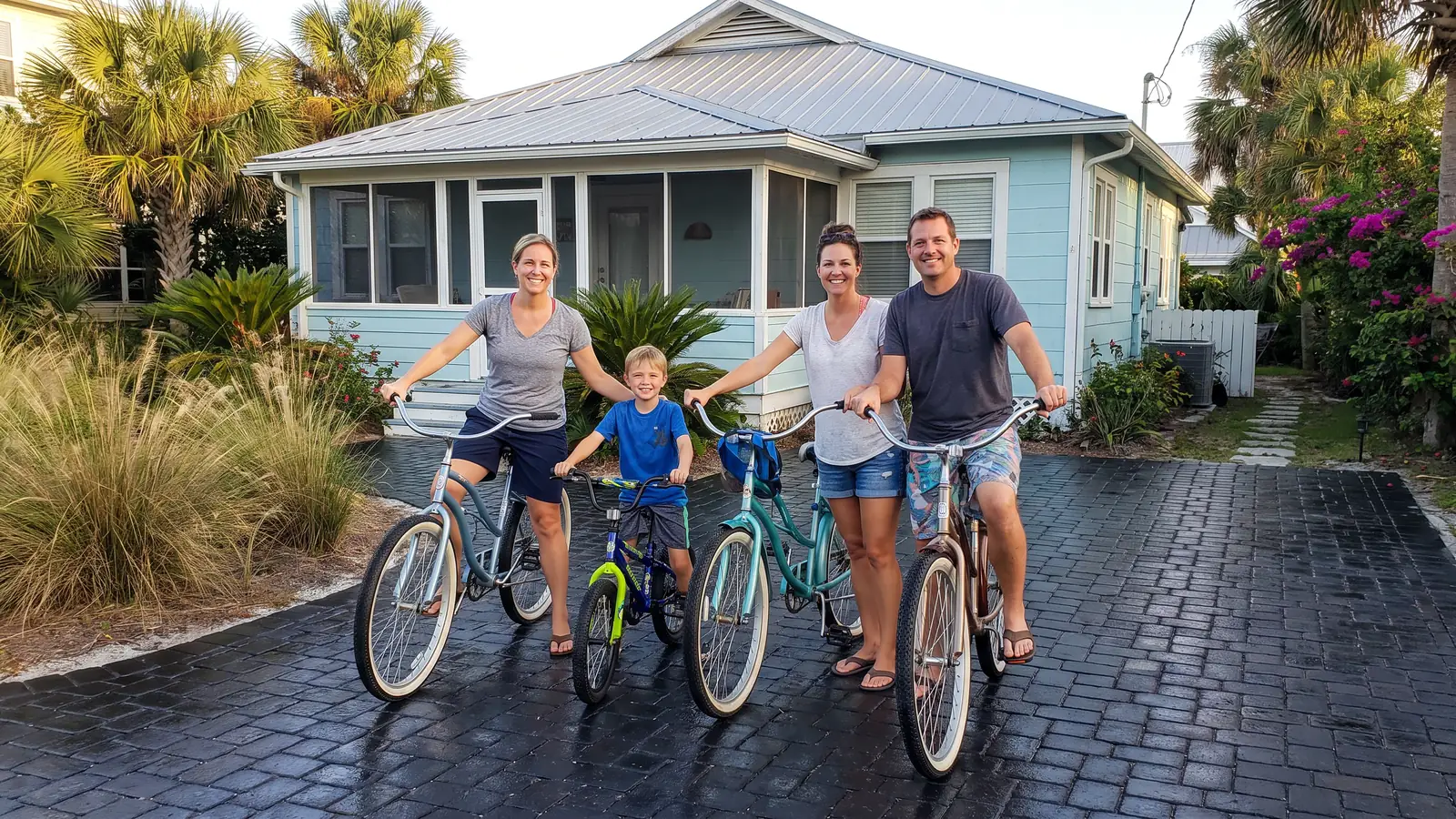
Lift rust, oil and leaf stains from pavers
Paver Stain Removal in Atlantic Beach, FL
Call (904) 685-4409 for a free estimate on rust, oil or tannin stains on pavers in Atlantic Beach.
- Brings out deeper paver color
- Fresh joint sand helps lock pavers in place
- Gives weeds less room to grow
- Makes the surface easier to keep clean
- Free estimate, no obligation
Request a Free Estimate
Free, no obligation.
Who removes stains from pavers in Atlantic Beach, and how fast is the reply?
A local contractor treats rust, oil, tannin and algae stains on pavers in Atlantic Beach, FL, and a reply lands inside 1 business day, usually sooner. The estimate is free and carries no pressure. To start, call (904) 685-4409.
Every stain on a paver has a cause you can read. Orange marks point to sprinklers, brown streaks come from oak and palm leaves, black spots come from a leaking car and green film grows where shade stays damp. Each kind needs its own treatment, which means one cleaner for everything is a poor plan. Say what you see and where when you request a free estimate online.
What are the stains on my Atlantic Beach pavers, and where do they come from?
Most stains on pavers fall into six groups, shown below. Naming the group is the first job, because the treatment follows from it. A contractor can usually tell from color and location. To ask about a spot, call (904) 685-4409.
Rust and orange spots
Safe Touch says rust comes from iron in well water and reclaimed irrigation. It is treated with a rust remover and a rinse, and extra pressure makes it worse.
Oil and grease
Safe Touch treats oil during the wash when water alone will not lift it. Unilock says dried oil is soaked up with a granular absorber for about six hours and cleaned again.
Leaf tannin
Unilock lists tree tannin as a common organic stain. Western Interlock says tannins bond with cement, which is why leaf stains can hang on after one wash.
Green and black growth
Algae and mildew sit on shaded pavers. A pretreatment loosens them before a controlled wash, and a Northeast Florida cleaning company, says many owners clean yearly.
White bloom
Unilock describes efflorescence as a powdery white mineral deposit that often fades on its own. It is not a stain in the usual sense, and sealing waits until it clears.
Sealer haze
Cloudy or milky patches can be sealer, not dirt. Stallone's Pro Wash says trapped moisture is the most common cause of white or cloudy pavers.
Why are my pavers turning orange near the sprinklers?
Iron in the water is the usual cause. Safe Touch says rust on pavers comes from iron in well water and reclaimed irrigation water. UF/IFAS says iron that oxidizes on sidewalks, driveways and patios leaves a reddish brown stain, and that such stains are chemical in nature and hard to remove. A UF/IFAS Florida-Friendly Landscaping segment adds that most Florida well water is high in iron. Tell the contractor where the sprinkler heads sit when you request a free estimate online.
Safe Touch treats rust with a rust remover followed by a rinse, and warns that extra pressure makes the stain worse. A Northeast Florida cleaning company also lists light rust from sprinkler minerals among the stains it treats. Because the water keeps coming, the stain can return, so ask about spray patterns too. To talk it over, call (904) 685-4409.
Can oil drips from the driveway be lifted out of pavers?
Often much of it can. Safe Touch treats oil when water alone will not lift it, and Unilock says to soak up fresh spills with a paper towel or kitty litter before cleaning. Dried oil takes longer: Unilock describes covering it with a granular absorber for about six hours and then cleaning again. A Northeast Florida cleaning company says many oil spots improve but results vary. Show the contractor the oldest spot when you request a free estimate online.
Will leaf and tree stains from Atlantic Beach oaks come out?
Usually, with the right treatment. Atlantic Beach is a Tree City USA, and the city runs a Call Before You Cut program for its tree protection rules, so shade stays a fixture over many yards. Unilock names tree tannin as a common organic stain, and Western Interlock says tannins bond with cement. That bond explains why a leaf stain can survive a rinse. Mention nearby trees when you request a free estimate online.
Shade matters beyond stains. A Northeast Florida cleaning company says algae, mildew and haze build on shaded pavers, and that many Northeast Florida owners clean once a year because of the humidity and shade. To plan a yearly wash with your stain work, call (904) 685-4409.
Is that white film a stain, or something else?
Check before treating it. Unilock describes efflorescence as a powdery white mineral deposit that can show up after installation, often fades on its own and goes away with time. Cloudy sealer is a different problem, since Stallone's Pro Wash says trapped moisture is the most common cause of white or cloudy pavers. One needs patience and the other needs stripping. To have a patch identified, call (904) 685-4409.
What does paver stain removal involve, and what limits does it have?
The process starts with identifying the stain, then testing a treatment on a small area. Unilock says to test any product on an inconspicuous spot first, and it warns that marble, limestone and travertine are acid sensitive. Joints get gentle handling because Unilock keeps pressure spray at 30 degrees or less. Ask which products will touch your pavers when you request a free estimate online.
Limits are real. Unilock says deep oil or rust may lighten rather than disappear, and the same cleaning company says older or deep-set stains may not come out completely. A contractor who says that up front is easier to trust. Afterward, joints can be re-sanded and sealer added if you choose. For a written plan, call (904) 685-4409.
What does paver stain removal cost in Atlantic Beach?
Stain work has no per square foot price of its own on any page read for this guide. Safe Touch lists rust and oil treatment inside its driveway and concrete cleaning range of $150 to $400, and $1.75 to $3.25 per square foot to clean, sand and seal pavers. The table sets those side by side. For a number on your own stains, request a free estimate online.
| Job | Published figure | Notes |
|---|---|---|
| Rust or oil spot treatment during a driveway or concrete wash | $150 to $400 | Safe Touch, covers rust and oil treatment in the cleaning price |
| Clean, sand and seal, 300 sq ft | $525 to $975 | At $1.75 to $3.25 per sq ft |
| Clean, sand and seal, 600 sq ft | $1,050 to $1,950 | At $1.75 to $3.25 per sq ft |
| Clean, sand and seal, 1,000 sq ft | $1,750 to $3,250 | At $1.75 to $3.25 per sq ft |
| Deep or old stains | Quoted after a look | May lighten instead of vanish, per Unilock and a Northeast Florida cleaning company |
Dollar figures are what Safe Touch, a Northeast Florida company, published as of November 2026. A spot treatment on a small area may cost less than the low end, and a large deck with many stains may cost more.
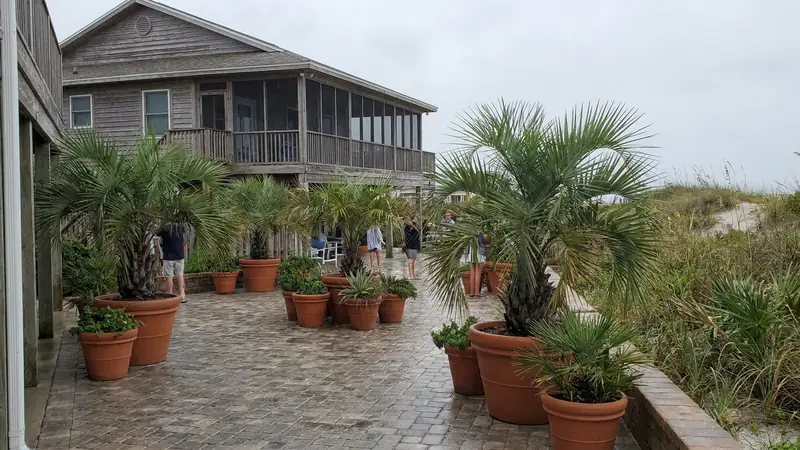
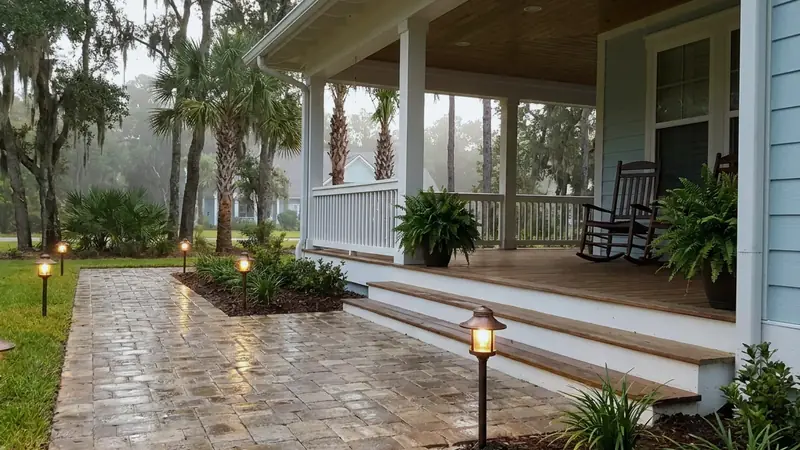
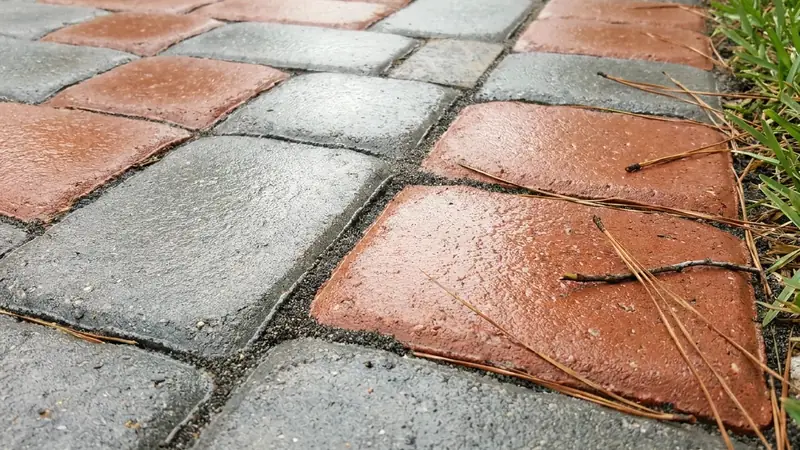
Can I see pavers after stain treatment near Atlantic Beach?
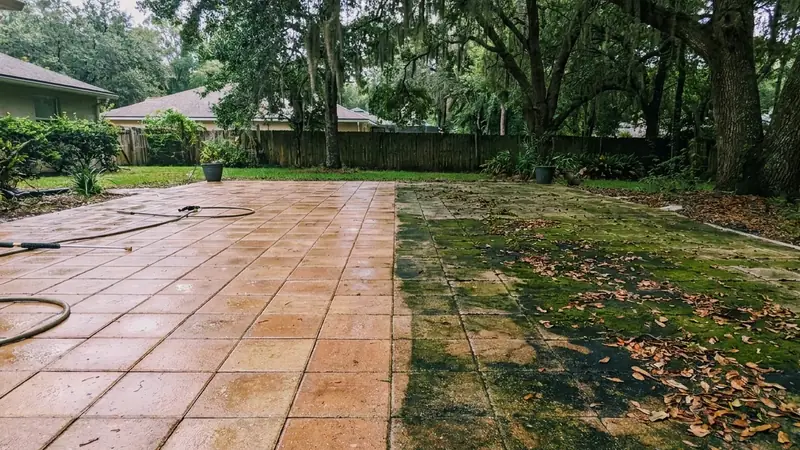
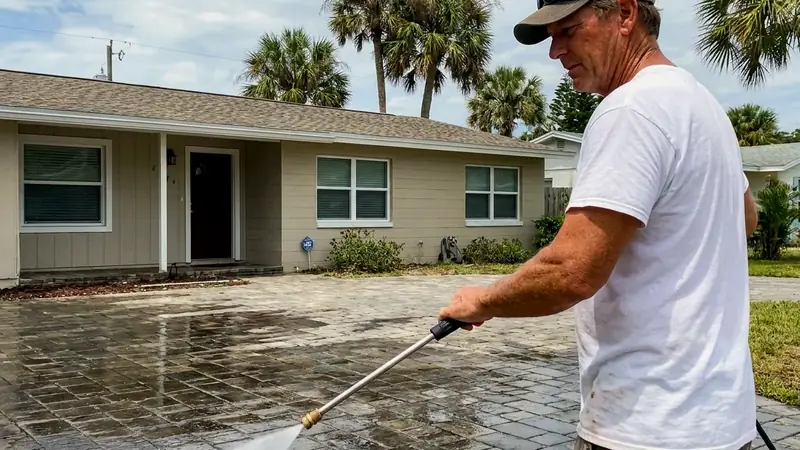
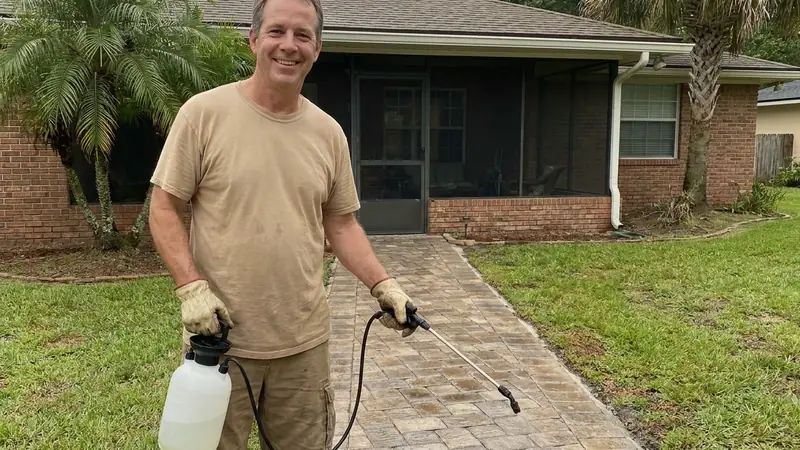
Should I seal pavers after the stains are gone?
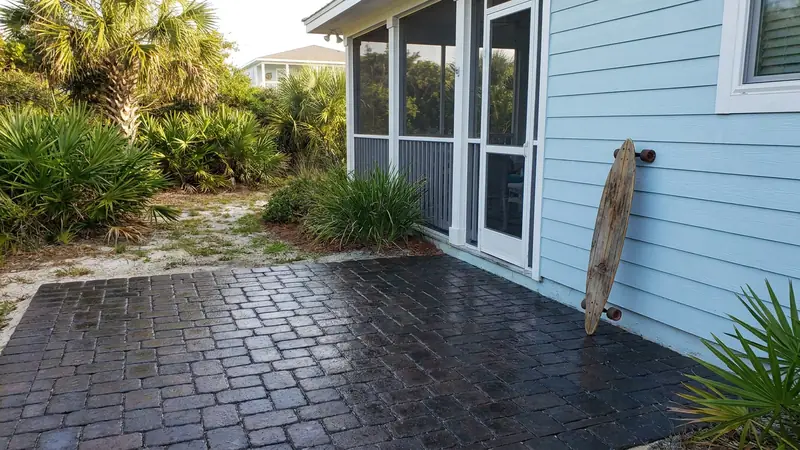
Often it makes sense, with one rule: clean and dry first. Unilock says pavers have fine capillaries that trap liquids and dirt, and that sealing helps block spills from soaking in. Outercle warns that sealing over a visible stain locks it in. So stain work comes first, sealing second, and extra coats do not buy extra protection. Ask which order is in the quote when you request a free estimate online.
Read the paver sealing guide for the coat itself. To get both jobs priced together, call (904) 685-4409.
Frequently Asked Questions
Is it good to seal pavers in Florida?
Yes, for stain control among other reasons. Unilock says pavers have fine capillaries that trap liquids and dirt, and that sealing after cleaning helps block spills from soaking in. Sealer does not fix stains that are already there.
How do I remove oil stains from brick pavers?
A contractor soaks up fresh oil first, then treats what remains. Unilock says dried oil is covered with a granular absorber for about six hours and cleaned again. Deep oil may lighten rather than vanish, so expectations are set at the estimate.
What not to use to clean pavers?
A few things cause harm. Unilock says not to scrub with a wire brush near rust, because bristles can leave metal that causes new rust stains. It says marble, limestone and travertine are acid sensitive, and it keeps pressure spray at an angle of 30 degrees or less so joint material stays in.
Why is paver sealing so expensive?
Stain work and sealing often happen together. Safe Touch publishes $1.75 to $3.25 per square foot to clean, sand and seal pavers, plus $150 to $400 for driveway and concrete cleaning that includes rust and oil treatment.
How much should I pay for paver sealing?
At the published $1.75 to $3.25 per square foot, a 600 square foot driveway comes to about $1,050 to $1,950 to clean, sand and seal. Spot treatment on its own sits in the $150 to $400 range Safe Touch gives for concrete and driveway cleaning.
Where do orange rust stains on pavers come from?
Often from sprinklers. Safe Touch says rust comes from iron in well water and reclaimed irrigation water, and UF/IFAS says iron that oxidizes on sidewalks, driveways and patios leaves a reddish brown stain that is chemical and hard to remove.
Will every stain come out of my pavers?
Not always. Unilock says deep oil or rust may lighten rather than disappear, and a Northeast Florida cleaning company, says older or deep-set stains may not come out completely. A fair contractor says that before starting.
Should I seal pavers right after stain removal?
Only once they are clean and dry. Unilock says to clean and dry pavers before sealing, and Outercle, a stone supplier, warns that sealing over a visible stain locks it in.
Are tree stains on pavers permanent?
Usually not. Unilock names tree tannins as a common organic stain, and Western Interlock says tannins bond with cement and can need more than one try. Fresh stains lift more easily than ones that have sat for a season.
Does pressure washing take joint sand out of pavers?
It can. Unilock says to keep spray angled no more than 30 degrees to avoid washing out joint material, and Safe Touch re-sands joints after storms and washes. Ask whether new sand is part of the quote.
Does stain removal reach homes outside Atlantic Beach?
Yes, across Duval County and nearby St. Johns County, with a page for each place below. If your street is not named below, call (904) 685-4409 and ask.
Ready to see those stains fade?
Call the number below or send the short form, and a contractor responds within 1 business day, often much sooner.
Free, no obligation